If you’ve spent any time looking at digital marketing courses online, you’ve probably seen the same promise over and over again:
“Get certified and start your digital marketing career.”
At first glance, it sounds reasonable. After all, certifications show that you’ve completed a course and learned the basics.
But here’s the reality.
A certificate might help you get noticed. It won’t automatically make you a digital marketer.
That may sound harsh, but it’s something many students, job seekers, and even business owners discover after spending weeks or months completing online courses.
They finish the lessons.
They download the certificate.
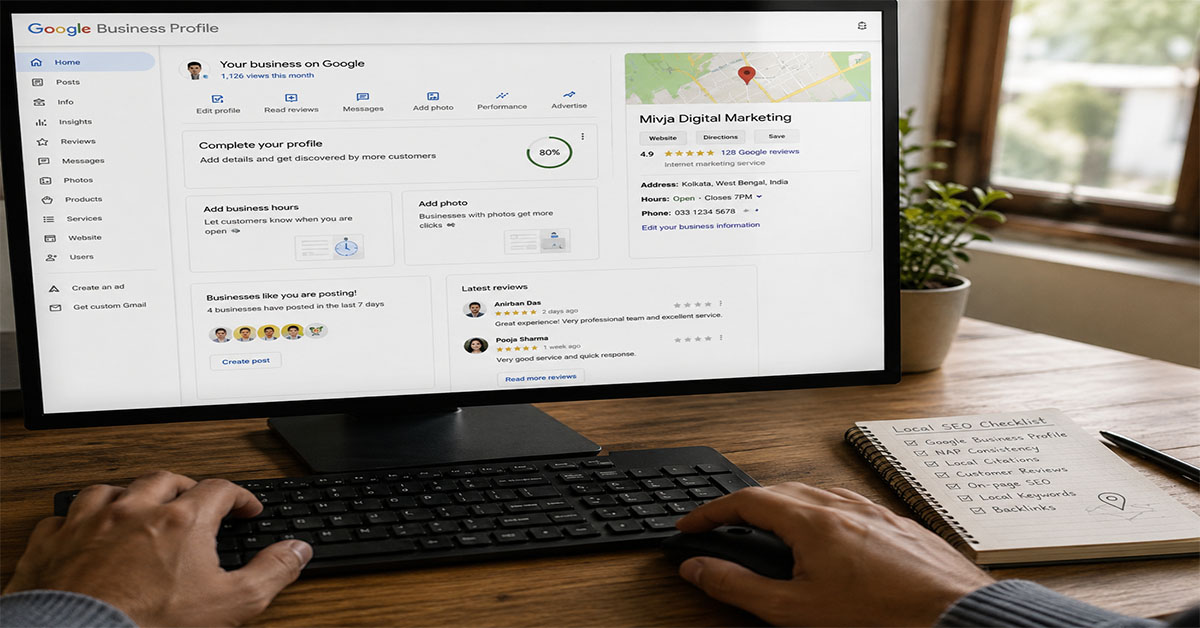
Then someone asks them to perform an SEO audit, create a Google Ads campaign, optimize a Google Business Profile, or improve a website’s search rankings.
That’s when they realize there’s a big difference between learning about digital marketing and actually doing it.
Why Certifications Became So Popular
There is nothing wrong with certifications.
In fact, many of them provide useful knowledge and a structured introduction to digital marketing concepts.
Google, HubSpot, Meta, and several other organizations offer certification programs that help beginners understand topics such as:
- Search Engine Optimization (SEO)
- Google Ads
- Social Media Marketing
- Content Marketing
- Email Marketing
- Analytics
- E-commerce Marketing
For someone entering the field for the first time, these programs can be extremely valuable.
The problem begins when people mistake a certificate for experience.
A certificate proves you completed a course.
Experience proves you can solve a problem.
Businesses usually care more about the second one.
The Mistake Many Beginners Make
One of the most common mistakes beginners make is collecting certificates without applying what they learn.
Some people complete course after course.
SEO certificate.
Google Ads certificate.
Social media certificate.
Analytics certificate.
Months later, they have an impressive collection of credentials but still struggle to perform basic marketing tasks confidently.
This isn’t because they’re not intelligent.
It’s because digital marketing is a practical skill.
You learn some parts by studying.
You master it by doing.
Nobody becomes good at driving by reading a manual.
Nobody becomes good at digital marketing by watching videos alone.
At some point, you need to get your hands dirty.
Employers Don’t Hire Certificates
Ask most business owners what they want from a digital marketer.
Very few will say:
“Show me your certificates.”
Instead, they ask questions like:
- Can you improve our Google rankings?
- Can you generate leads?
- Can you manage advertising campaigns?
- Can you improve our Google Business Profile?
- Can you create content that attracts customers?
- Can you increase website traffic?
These questions focus on results.
That’s because businesses don’t invest in marketing for certificates.
They invest in marketing for growth.
A candidate who can demonstrate practical experience often has an advantage over someone with multiple certifications but no portfolio.
What Practical Training Actually Teaches You
The biggest advantage of practical training is that it exposes you to real situations.
Things don’t always go according to plan.
Keywords don’t rank immediately.
Ads don’t always perform well.
Content doesn’t always attract traffic.
Sometimes a strategy works.
Sometimes it fails.
And those failures often become the most valuable lessons.
When learners work on real projects, they begin to understand:
- How search engines behave
- How customers search online
- How advertising budgets should be managed
- How data influences decisions
- How to troubleshoot problems
- How different marketing channels work together
These are the skills that separate marketers from learners.
Local SEO Is a Perfect Example
Let’s take local SEO as an example.
Most courses can explain what a Google Business Profile is.
That’s useful.
But understanding the concept is different from optimizing an actual profile.
Can you identify missing categories?
Can you improve local rankings?
Can you manage reviews?
Can you build citations?
Can you improve visibility on Google Maps?
These tasks require practice.
As local search becomes more important for small businesses, practical local SEO skills are becoming increasingly valuable.
Businesses want marketers who can help them attract nearby customers, not just explain how Google works.
Digital Marketing Changes Constantly
Another reason practical training matters is that digital marketing never stands still.
Search engines update algorithms.
Advertising platforms introduce new features.
Social media platforms change their rules.
Consumer behaviour evolves.
Artificial intelligence continues transforming workflows.
What worked three years ago may not work today.
Sometimes what worked six months ago doesn’t work today.
This is why successful marketers develop a habit of testing, learning, and adapting.
Practical experience teaches adaptability.
Theory teaches concepts.
Both are useful.
But adaptability is often what keeps marketers relevant over time.
Building a Portfolio Is More Valuable Than Most People Realize
Imagine two job applicants.
The first has ten certifications.
The second has three certifications and a portfolio containing:
- SEO audits
- Website optimization projects
- Google Ads campaigns
- Content strategies
- Local SEO projects
- Analytics reports
Which candidate is likely to attract more attention?
For many employers, the answer is obvious.
A portfolio demonstrates ability.
It shows evidence.
It proves that someone has applied their knowledge in a practical environment.
The same principle applies to freelancers.
Clients want to see examples of work.
They want proof that a marketer can deliver results.
A portfolio often becomes the strongest asset a digital marketer can build.
How Businesses Evaluate Marketing Talent
Many people assume digital marketing hiring is primarily based on qualifications.
In reality, employers often evaluate a combination of factors:
- Technical knowledge
- Communication skills
- Problem-solving ability
- Analytical thinking
- Creativity
- Practical experience
These qualities are difficult to measure through certification exams alone.
They’re developed through practice.
That’s why experienced marketers often continue learning through experimentation long after completing formal training.
The learning never really stops.
Choosing the Right Digital Marketing Training Program
Not all training programs are designed the same way.
Some focus heavily on theory.
Others focus on implementation.
When evaluating a course, it helps to ask questions such as:
- Will I work on practical projects?
- Will I build a portfolio?
- Will I use industry tools?
- Will I receive guidance from experienced professionals?
- Will I learn how to solve real business problems?
These questions are often more important than asking how many certificates a course provides.
Many modern training providers have started shifting toward project-based learning for exactly this reason.
Institutes such as Mivja and other practical training organizations increasingly focus on real-world assignments, local SEO projects, Google Business Profile optimization, and hands-on implementation because these experiences help learners develop skills that employers and clients actually value.
The Future Belongs to Skilled Practitioners
Digital marketing remains one of the most accessible career paths available today.
Students can enter the field.
Professionals can transition into it.
Freelancers can build businesses around it.
Business owners can use it to grow their companies.
But success rarely comes from collecting certificates alone.
The people who tend to succeed are the ones who apply what they learn.
They test ideas.
They build projects.
They analyze results.
They improve continuously.
Over time, that practical experience compounds.
And eventually, it becomes more valuable than any certificate hanging on a wall.
The Bottom Line
Certifications still have value.
They provide structure, credibility, and a foundation for learning.
But they should be viewed as a starting point rather than the destination.
Digital marketing is ultimately a skill-based profession.
Results matter.
Execution matters.
Problem-solving matters.
The ability to take knowledge and apply it in real situations is what creates opportunities.
For anyone serious about building a career in digital marketing, practical training isn’t just helpful.
It’s the part that turns learning into capability.
Share this content:



Post Comment